Buying Clothes Vocabulary In English

Shopping for clothes in English is much easier when you know a few useful phrases for size, colour, fit and price.

In this lesson, you’ll learn practical buying clothes vocabulary in English, useful questions to ask a shop assistant and short dialogues you can use in a real clothes shop.

You’ll also learn the difference between fit, suit and match, how to ask about an exchange or refund, and some useful English for buying clothes for work.

Buying clothes vocabulary in English with useful phrases for asking about size, colour, fit and price Save
In this lesson

What you’ll learn

By the end of this lesson, you’ll be able to:

  • ask for a particular item, size or colour
  • ask whether something is in stock
  • ask to try clothes on
  • explain that something is too big, small, tight or loose
  • talk about whether clothes fit or suit you
  • ask about prices and sales
  • exchange or return something
  • use clothes vocabulary when shopping for workwear
In the shop

Useful English phrases for shopping for clothes

Let’s start with the phrases you’re most likely to need when you walk into a clothes shop.

When a shop assistant asks if you need help

A shop assistant will often start with Can I help you?

If you know what you want, you can say:

  • Yes, I’m looking for a jacket.
  • Yes, I’m looking for a pair of black trousers.
  • I’m looking for a shirt to wear to a wedding.

If you don’t need any help yet:

  • I’m just looking, thanks.
  • I’m just having a look, thanks.

Both are natural ways to tell the shop assistant that you want to look around on your own.

Asking for your size

When you find something you like, you may need to ask for a different size.

  • Do you have this in my size?
  • Do you have this in a size 12?
  • Do you have this in a medium?
  • Have you got this in a larger size?
  • Do you have the next size up?
  • Do you have the next size down?

If the assistant asks What size are you?, you can answer:

  • I’m a size 12.
  • I usually take a medium.
  • I’m normally a large in jackets.

Notice that we usually say I’m a size 12, not simply I’m size 12.

Asking about colour

You may like the item but not the colour.

  • Do you have this in black?
  • Does this come in any other colours?
  • Do you have this in a darker colour?
  • Have you got anything similar in blue?
  • Is this the only colour you have?

These phrases are useful when you already like the style and only want to see another colour.

Asking whether something is in stock

  • Do you have this in stock?
  • Is this still in stock?
  • Do you have any more of these?
  • Do you have a medium in stock?
In stock or sold out?

If the shop has the item available, it is in stock. If all of that item has been sold, it is sold out.

I’m afraid we’ve sold out of the medium.

That colour is sold out at the moment.

Trying clothes on in English

Before you buy something, you’ll probably want to try it on.

  • Can I try this on?
  • Could I try this on, please?
  • Can I try these trousers on?
  • Where are the fitting rooms?
  • Where are the changing rooms?

A fitting room or changing room is the place in a shop where you try clothes on.

Remember the phrasal verb try something on. With a pronoun, the pronoun goes in the middle:

  • Can I try on it?Can I try it on?

With a noun, both orders are possible — try this jacket on or try on this jacket. But with a pronoun (it, them), only try it on and try them on are correct.

Does it fit?

Talking about how clothes fit

Once you’ve tried something on, you need vocabulary to explain whether the size is right.

How does it fit?
  1. Too small / too tightClose to the body and uncomfortable
  2. Just rightFits you exactly as you want
  3. Too big / too looseNot close enough to the body
  • too tight — feels too small or uncomfortable because it is close to your body. This shirt is too tight. / It’s a bit tight around the shoulders. / These trousers are too tight around the waist.
  • too loose — not close enough to your body. This jacket is too loose. / It’s a little loose around the waist.
  • too big — larger than you need. This is too big for me. / The jacket is a bit too big.
  • too small — smaller than you need. This is too small for me. / I think I need the next size up.
  • too long — longer than you need. These trousers are too long. / The sleeves are a little too long.
  • too short — shorter than you need. The trousers are too short. / The sleeves are a bit short on me.
  • just right — fits exactly as you want. This fits perfectly. / This one fits much better. / The size is just right. / Yes, this fits me.
Difference between fit, suit and match when talking about clothes in English Save
Three tricky words

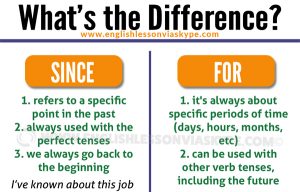
Fit, suit and match: what’s the difference?

These three words are very useful when talking about clothes, but they don’t mean the same thing.

fitis about size and shape

Fit tells you whether something is the right size and shape for your body.

ExamplesThese trousers fit me perfectly.
This jacket doesn’t fit. It’s too small.
Does this shirt fit you?

suitis about how it looks on you

Suit means that something looks good on a person.

ExamplesBlue really suits you.
That style doesn’t really suit me.
Do you think this jacket suits me?

So something can fit you but not suit you. The size may be correct, but you may not like how the colour or style looks on you.

matchis about two things together

Match means that two or more things look good together because their colours or styles work together.

ExamplesThis shirt matches your trousers.
Those shoes don’t really match the dress.

You can also use go with in everyday English — Does this jacket go with these trousers? / I need some shoes that will go with this dress.

Word What it means
fitThe right size and shape for your body
suitLooks good on you (colour or style)
match / go withTwo items look good together
How much?

Asking about the price and sales

Of course, you’ll probably want to know how much something costs.

  • How much is this?
  • How much are these trousers?
  • Is this in the sale?
  • Is there any discount on this?
  • How much is it with the discount?
In the sale or on sale?

In British English, we often say It’s in the sale.

In American English, you’ll often hear It’s on sale.

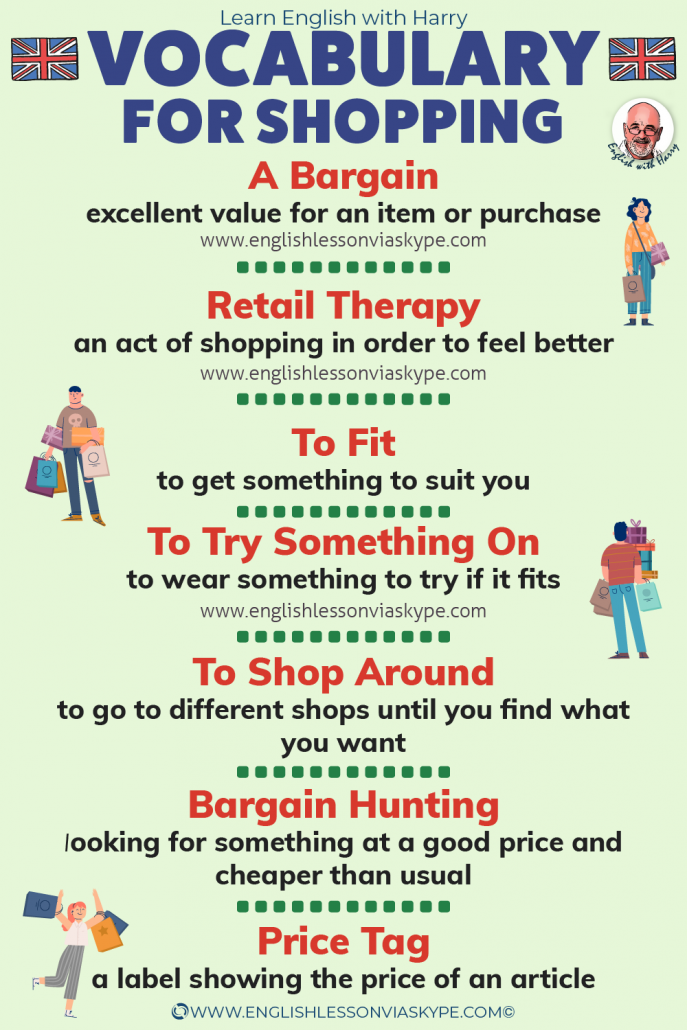
If something is very good value for the price, you can call it a bargainI got this jacket for £30. It was a real bargain.

Deciding to buy something

When you’ve decided what you want:

  • I’ll take it.
  • I’ll take this one.
  • I’ll take them. / I’ll take these.

You might also need:

  • Can I pay by card?
  • Could I have a receipt, please?
  • Can I have a bag, please?
In conversation

Buying clothes in English: dialogues

Here’s a simple clothes shopping dialogue using some of the vocabulary we’ve looked at.

Dialogue · buying a polo shirt

Shop assistant: Can I help you?

Customer: Yes, I’m looking for a polo shirt.

Shop assistant: They’re over here. What size are you looking for?

Customer: I usually take a medium.

Shop assistant: Let me check. Yes, we have one in medium.

Customer: Great. Can I try it on?

Shop assistant: Of course. The fitting rooms are just over there.

Customer: Thanks.

A few minutes later…

Customer: It fits well, but do you have it in blue?

Shop assistant: Let me see. Yes, we have the same shirt in navy.

Customer: Perfect. I’ll take that one.

Asking about something you saw online

A lot of us now look at clothes online before going into a shop. Here’s how that conversation might sound.

Dialogue · a cashmere jumper

Nick: I’m looking for a cashmere jumper I saw on your website. Do you have it in stock?

Shop assistant: Which colour were you looking for?

Nick: The navy one.

Shop assistant: I’m afraid the navy one is sold out at the moment, but we have it in grey and dark green.

Nick: Do you have the grey one in a medium?

Shop assistant: Yes, we do.

Nick: Great. Could I see it, please?

Shop assistant: Of course.

Exchanges & refunds

Exchanging clothes in English

Sometimes you get home and realise that something doesn’t fit, or perhaps you bought it for someone else and chose the wrong size. Useful phrases include:

  • I’d like to exchange this, please.
  • Could I exchange this for a larger size?
  • Do you have this in the next size up?
  • I bought this last week, but it doesn’t fit.
  • I have the receipt.
  • Could I return this, please?
  • Could I have a refund, please?
Dialogue · exchanging a jacket

Jo: Hi. I bought this jacket last week for my boyfriend, but unfortunately it doesn’t fit him. It’s too tight.

Shop assistant: Do you have the receipt?

Jo: Yes, here it is. Could I exchange it for a larger size?

Shop assistant: Of course. We have an extra-large in stock.

Jo: Great. I’ll exchange it for that one, please.

Vocabulary

Buying clothes vocabulary: useful words and phrases

Here are the key words and phrases from this lesson, with a short meaning and an example for each.

  • in stock — available in the shop and ready to buy. Do you have this jacket in stock?
  • sold out — all of that item has been sold, so there are none left. I’m afraid that size is sold out.
  • try on — put clothes on temporarily to see whether they fit or suit you. Can I try this dress on?
  • fitting room / changing room — a room in a shop where customers can try clothes on. Where are the changing rooms?
  • fit — be the correct size and shape for someone. These jeans fit me really well.
  • suit — look good on someone. That colour suits you.
  • match — look good with another item. The shoes match the jacket.
  • size up — one size larger. Could I try the next size up?
  • size down — one size smaller. I think I need a size down.
  • exchange — return something and take another item instead. Can I exchange this for a different size?
  • refund — money that is returned to you after you return something. Could I have a refund, please?
  • receipt — the paper or electronic record showing what you bought and how much you paid. Do you still have the receipt?
  • bargain — something bought for a very good price. That coat was a real bargain.
  • in the sale — being sold at a reduced price. I bought these trousers in the sale.
  • I’ll take it — a natural way to tell the shop assistant that you’ve decided to buy something. It fits perfectly. I’ll take it.
Get it right

Common mistakes when talking about clothes in English

1. fit or suit?

Don’t use suit when you’re talking about size.

Same trousers, two different meanings

The trousers don’t fit me. — The size or shape is wrong.

The trousers don’t suit me. — You don’t think they look good on you.

2. try or try on?

When you put clothes on to see whether they fit, use try on.

  • Can I try this jacket?Can I try this jacket on?

3. size 12

A natural way to talk about your clothes size is I’m a size 12 or I take a size 12.

  • I’m size 12.I’m a size 12.

4. in the sale or on sale?

British and American English

In British English: Is this in the sale?

In American English: Is this on sale?

Both refer to something being sold at a reduced price.

At work

Buying clothes for work: dress codes and business trips

Clothes vocabulary is also useful at work. You may need to buy something for a job interview, a conference, a client meeting, a business dinner or a new job with a different dress code.

Here are some useful phrases:

  • I’m looking for something smart but not too formal.
  • I need a jacket I can wear to work.
  • I need something a little more formal for a client meeting.
  • Is this suitable for a business dinner?
  • I’m travelling to a conference and need something comfortable but smart.
  • Do you have a shirt that would go with these trousers?
  • The invitation says business casual. Would this be suitable?

Some useful words are:

  • smart — neat and well presented, but not necessarily very formal.
  • formal — suitable for occasions where more traditional or professional clothes are expected.
  • casual — relaxed, everyday clothes.
  • dress code — rules or expectations about what people should wear. The dress code is quite formal.
  • suitable / appropriate — right for a particular situation. That jacket would be suitable for a client meeting. / These shoes are comfortable, but they’re probably too casual for the event.
Free resources

Use English at work too?

If you use English at work, you need practical language for more than shopping — asking a colleague for something, clarifying a point in a meeting, writing an email or explaining a problem clearly.

You can practise real workplace situations with my free Business English resources.

Explore free Business English resources →
Your turn

Quick practice: what would you say?

Choose the most natural phrase for each situation. Your score appears once you’ve answered all eight.

0 of 8 answered

Question 1

You like a jacket, but the medium is too tight and you want a bigger one.

What do you ask the assistant?

Question 2

A shop assistant asks “Can I help you?” but you only want to look around.

What do you say?

Question 3

You want to try a pair of trousers. Choose the correct word order.

Can I …?

Question 4

You bought a jumper, but it’s too small.

What do you say?

Question 5

You saw a shirt on the shop’s website and want to know if they have it.

What do you ask?

Question 6

The jacket is the right size, but you don’t like how the colour looks on you.

What do you say?

Question 7

The assistant asks “What size are you?”

Which answer is the most natural?

Question 8

In British English, you want to ask if something is reduced in price.

What do you ask?

Answers

Show the answers
  1. Do you have the next size up?
  2. I’m just looking, thanks.
  3. Can I try them on?
  4. Could I exchange this for a larger size?
  5. Do you have this shirt in stock?
  6. I don’t think this colour suits me.
  7. I’m a size 12.
  8. Is this in the sale?

Try to answer before you check. If you get one wrong, read the feedback and say the correct phrase out loud a couple of times so it starts to feel natural.

Quick recap

Buying clothes vocabulary in English: quick recap

When you’re shopping for clothes in English, you don’t need hundreds of expressions. Start with a few phrases you know you’ll use:

  • I’m looking for…
  • Do you have this in my size?
  • Do you have this in another colour?
  • Can I try it on?
  • Where are the fitting rooms?
  • It’s a bit too tight.
  • Do you have the next size up?
  • Does this colour suit me?
  • Is this in the sale?
  • I’ll take it.
  • Could I exchange this for a larger size?

Practise these until they come naturally. Then add a few more.

Common questions

Frequently asked questions about buying clothes in English

What do you say when buying clothes in English?

You can start with I’m looking for… if you need help finding something.

Useful questions include Do you have this in my size?, Can I try this on? and Do you have this in another colour?

How do I ask for my clothes size in English?

You can say Do you have this in a medium?, Do you have this in a size 12? or Do you have the next size up?

If someone asks your size, you can say I’m a size 12 or I usually take a medium.

What is the difference between fit and suit?

Fit refers to size and shape. If a jacket fits you, it is the correct size.

Suit refers to appearance. If a colour suits you, it looks good on you.

What does “try on” mean?

Try on means to put on clothes or shoes for a short time to see whether they fit or suit you.

Can I try this jacket on?

What is the difference between “in stock” and “sold out”?

If something is in stock, the shop has it available to buy.

If something is sold out, all of that item has been sold and there are none available at the moment.

How do I ask to exchange clothes in English?

You can say Could I exchange this for a larger size? or I’d like to exchange this, please.

If you want your money back instead, you can ask Could I have a refund, please?

What do British people call the room where you try on clothes?

You’ll hear both fitting room and changing room in British English. Both are natural when talking about the area in a clothes shop where customers try clothes on.

How do I ask if clothes are reduced in price?

In British English, you can ask Is this in the sale? You can also ask Is there any discount on this?

In American English, Is this on sale? is common.

One-to-one lessons

Want to practise your English with a teacher?

If you want to practise speaking for everyday situations, travel or work, book a one-to-one trial lesson and tell us what you want to improve.

We’ll listen to your English, help with the main problems and give you clear areas to work on.

Book a trial lesson →

Trial lesson · Trial details and the booking form are on the same page

Share this lesson

Found this lesson useful? Share it with someone who is learning English for travel, shopping or work.

Keep learning

Related English lessons

If this lesson was useful, these will help you talk about clothes, shopping and everyday situations more confidently.