When you talk about feelings in English, you don’t always have to use the words happy and sad.
English has many idioms that help you describe exactly how you feel, from being extremely pleased to feeling disappointed or low.
In this lesson, you’ll learn 12 common English idioms related to happiness and sadness. You’ll see what each idiom means, how to use it naturally and which expressions are also useful in informal conversations at work.
Watch: idioms about happiness and sadness
Watch Harry explain the twelve idioms and hear how they sound in natural English.
English idioms for happiness
These idioms help you describe different kinds of happiness, from enjoying something to feeling extremely pleased after receiving good news.
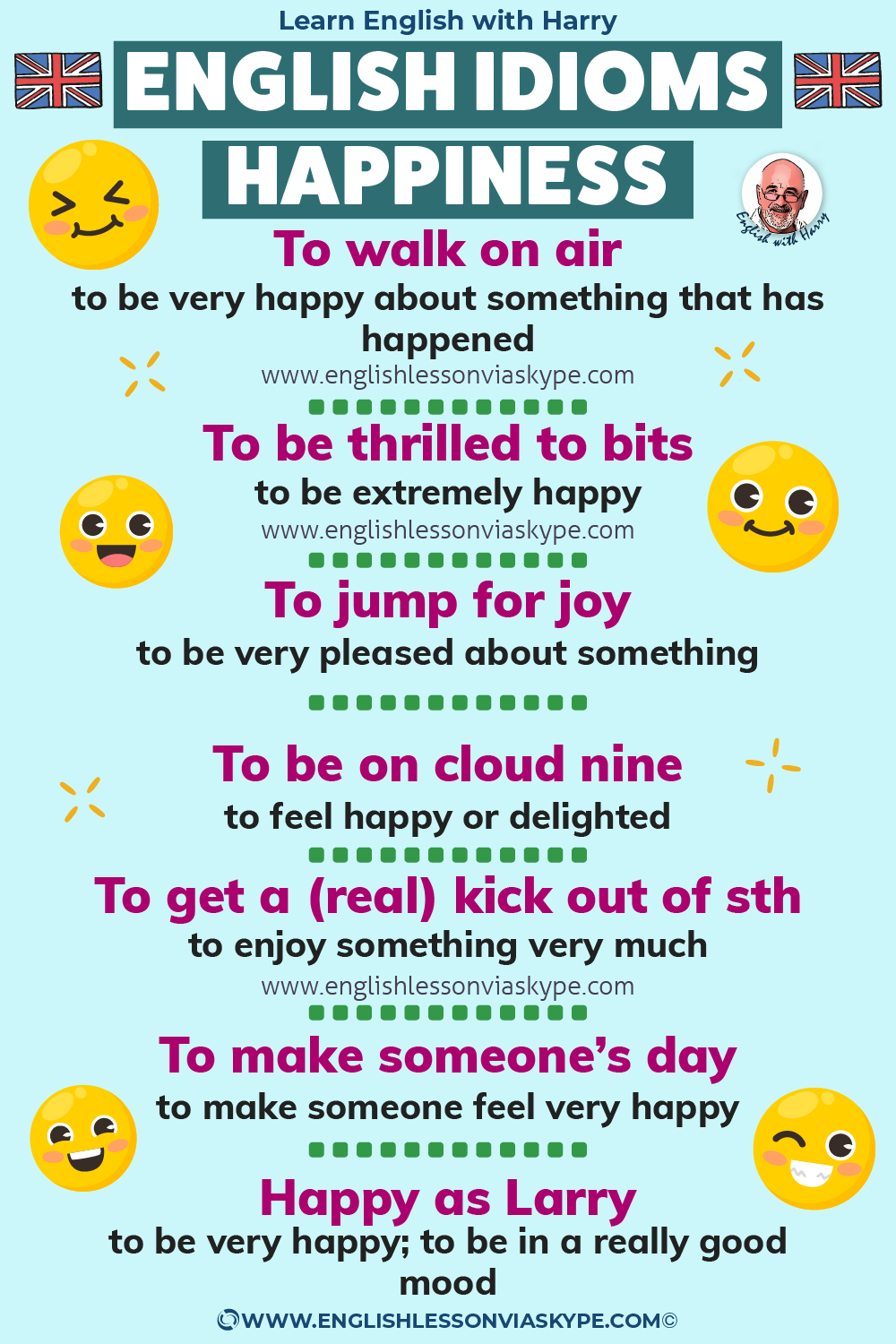
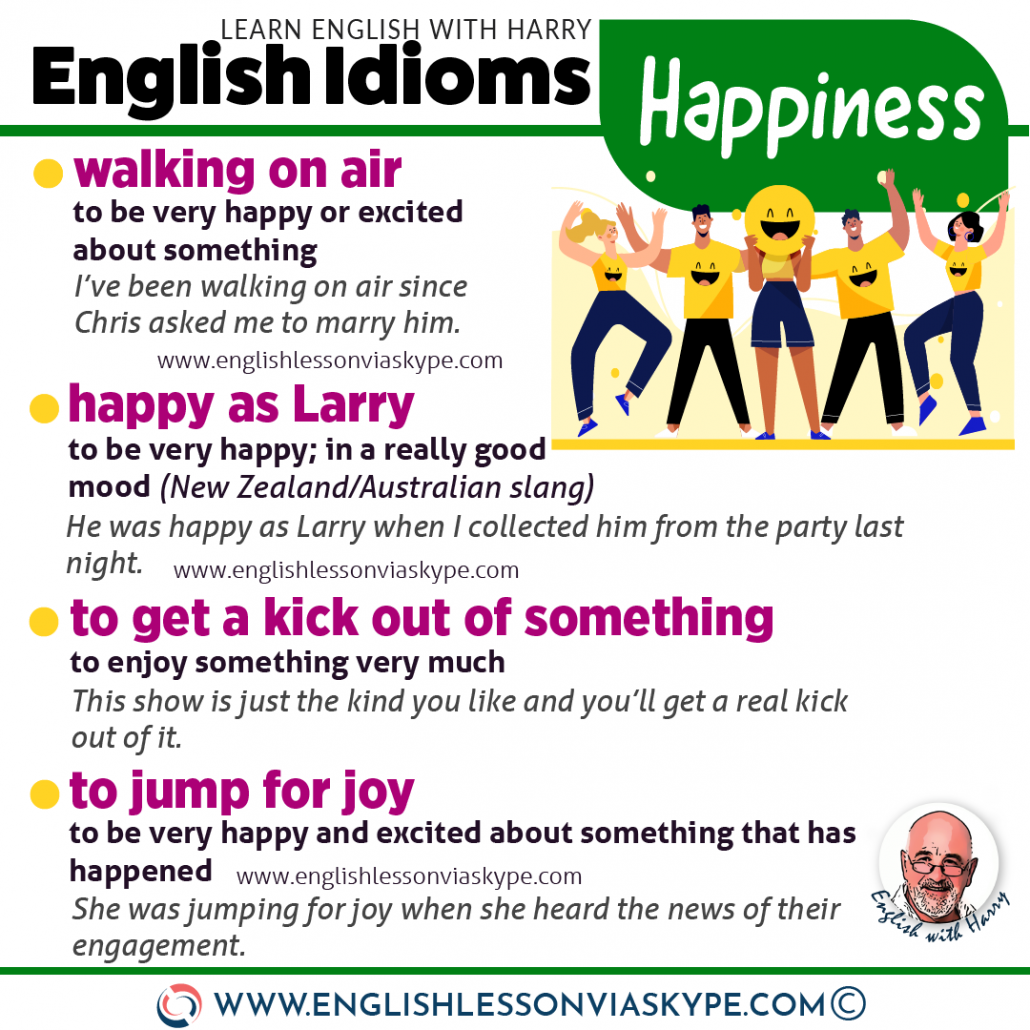
1. Get a real kick out of something
MeaningTo enjoy something very much.
This is an informal expression. You can use it when an activity or experience gives you a lot of pleasure.
I get a real kick out of seeing a project come together after weeks of work.
You can also leave out real:
- I get a kick out of trying new recipes at the weekend.
2. Be thrilled to bits
MeaningTo be extremely happy or pleased about something.
This is a common informal British English expression.
She was thrilled to bits when she heard she’d got the promotion.
You can use it when something genuinely excites or pleases you.
3. Jump for joy
MeaningTo be extremely happy and excited because something good has happened.
You don’t have to physically jump. The expression simply shows a very strong feeling of happiness.
When they told us the client had approved the proposal, we were ready to jump for joy.
4. Walk on air
MeaningTo feel extremely happy after something good has happened.
When someone is walking on air, they feel so happy that everything seems easier.
He’s been walking on air since he found out he got the new job.
5. Make someone’s day
MeaningTo make someone feel very happy, often because of something kind or unexpected.
This is a very useful expression in everyday English.
Your message really made my day. I wasn’t expecting such positive feedback.
You can also say:
- That compliment made her day.
6. Happy as Larry
MeaningTo be very happy and content.
This is a very informal expression. You may hear it in British, Irish and Australian English, but it isn’t an expression you need in formal situations.
Once the presentation was finished and everything had gone well, he was happy as Larry.
English idioms for sadness and difficult feelings
The next expressions describe feeling unhappy, disappointed or uncomfortable. A few of them also describe how someone behaves when they’re unhappy.
7. Be out of sorts
MeaningTo feel slightly unwell, unhappy or simply not like your usual self.
This is useful when something doesn’t feel quite right, but you don’t necessarily know why.
I’m a bit out of sorts today, so I may be quieter than usual.
It can refer to your mood or to how you feel physically.
8. Down in the dumps
MeaningTo feel unhappy or low.
This is informal and very common in spoken English.
She was down in the dumps after the project was cancelled.
You would normally use this for a temporary period of unhappiness rather than a very serious situation.
9. Not the end of the world
MeaningThe situation isn’t as serious as it may seem.
This expression is often used to reassure someone after something has gone wrong.
We’ve missed the internal deadline, but it’s not the end of the world. We can send the final version tomorrow.
If the other person thinks the problem is serious, saying it’s not the end of the world can sound dismissive.
10. A misery guts
MeaningSomeone who is miserable, negative or complains a lot.
This is very informal and can sound insulting.
Don’t be such a misery guts. The meeting wasn’t that bad.
You’re more likely to hear this between friends or people who know each other well.
11. Sour grapes
MeaningA negative reaction to something you wanted but didn’t get.
If someone criticises something only because another person got it instead, you might describe their reaction as sour grapes.
He said the promotion wasn’t important, but it sounded like sour grapes after someone else got it.
This expression can sound quite judgemental, so think carefully before using it about someone you work with.
12. Grin and bear it
MeaningTo accept an unpleasant or difficult situation because you can’t change it at the moment.
The system is very slow today, so we’ll have to grin and bear it until IT fixes the problem.
This doesn’t mean you should ignore a serious problem. It’s normally used for temporary situations that are annoying but manageable.
Can you use these idioms at work?
Yes, but the situation matters.
In relaxed conversations with colleagues, idioms can make your English sound more natural. In a client meeting, formal presentation or important email, simple and direct English is often the better choice.
Natural in informal workplace conversations
These expressions are easy to use with colleagues.
- Make someone’s dayThat feedback really made my day.
- Be thrilled to bitsI was thrilled to bits when they approved the budget.
- Be out of sortsI’m a bit out of sorts today, so I may be quieter than usual.
- Down in the dumpsHe was a bit down in the dumps after the proposal was rejected.
- Not the end of the worldIt’s not the end of the world. We can correct the figures and send the file again.
- Grin and bear itThe air conditioning is broken again, so we’ll have to grin and bear it this afternoon.
Use these more carefully at work
Get a kick out of something, jump for joy, walk on air and happy as Larry are all natural English, but they’re quite informal.
They can work when you’re chatting with colleagues:
- I’ve been walking on air since I heard I got the new role.
- We’ll be jumping for joy if they sign the contract.
But in a formal email or conversation with a client, simpler English is usually safer:
- I’m really pleased with the result.
- I’m delighted that the proposal has been approved.
- We’re very happy with the outcome.
Two expressions that can easily sound personal
Be particularly careful with misery guts and sour grapes.
Calling someone a misery guts is a personal comment and can sound insulting.
Saying that someone’s reaction is sour grapes suggests that they’re jealous or bitter because they didn’t get what they wanted.
You may hear both expressions in English, but understanding an idiom doesn’t mean you need to use it in every situation.
A useful rule for workplace English
Idioms work best when the situation is informal and the meaning is clear.
When you’re discussing a problem, giving feedback, disagreeing, explaining a mistake or writing an important email, clear English is usually more useful than a colourful idiom.
Need English for real situations at work?
You may know plenty of English vocabulary but still hesitate when you need to respond quickly at work.
My free Business English resources give you practical English for situations such as asking for clarification, answering an unexpected question, disagreeing, speaking in meetings and checking whether an email sounds too direct or too formal. You can choose a free guide, quiz or interactive tool depending on what you need to practise.
Explore free Business English resources →Quick practice: choose the right idiom
Choose one of the idioms from this lesson to complete each situation. Your score appears once you’ve answered all five.
0 of 5 answered
You receive an unexpected message from your manager praising your work.
That message really ________.
Your colleague has been unusually quiet all morning and doesn’t seem like himself.
He seems a bit ________ today.
A project you worked hard on has been cancelled.
I was really ________ after I heard the news.
You make a small mistake, but you can easily correct it.
It’s ________. I can fix it this afternoon.
Someone says that getting promoted doesn’t matter after another colleague gets the job.
That sounds a little like ________.
Answers
Show the answers
- made my day
- out of sorts
- down in the dumps
- not the end of the world
- sour grapes
Listen to more English idioms for emotions
If you prefer to learn by listening, continue with episode 491 of Speak Better English with Harry.
This lesson covers more idioms for expressing happiness and sadness, with clear explanations and examples.
Frequently asked questions
What are some common English idioms for happiness?
Common happiness idioms include thrilled to bits, jump for joy, walk on air, make someone’s day and happy as Larry. They describe different kinds and levels of happiness.
What are some common English idioms for sadness?
Common idioms connected with sadness include down in the dumps, out of sorts and misery guts.
You can also use grin and bear it when you’re talking about accepting an unpleasant situation that you can’t change immediately.
What does “down in the dumps” mean?
Down in the dumps means feeling unhappy or low.
For example:
I was down in the dumps after I didn’t get the job.
It’s an informal expression and is most common in conversation.
What is the difference between “out of sorts” and “down in the dumps”?
Down in the dumps specifically describes feeling unhappy or low.
Out of sorts is broader. You might feel unhappy, slightly unwell, tired or simply not like yourself.
For example:
I don’t know what’s wrong with me today. I’m just a bit out of sorts.
What does “sour grapes” mean?
Sour grapes describes a negative or dismissive reaction to something that another person has achieved or received, especially when the speaker wanted it too.
For example:
He says the award is meaningless now, but I think that’s just sour grapes.
Can I use happiness and sadness idioms in Business English?
Yes, especially in informal conversations with colleagues. Expressions such as make my day, thrilled to bits, out of sorts and not the end of the world can sound natural at work.
However, some idioms are too informal or personal for formal meetings, client emails or sensitive situations. When the situation matters, simple and clear English is usually safer.
Keep practising English idioms for feelings and emotions
You don’t need to memorise all 12 idioms at once.
- Choose three or four expressions that you can imagine using.
- Write your own example for each one.
- Say the sentence aloud.
- Connect the idiom with a real situation from your life or work.
That makes the expression much easier to remember when you actually need it.
Practise the English you actually need at work
Choose a free guide, quiz or interactive tool for the situation that causes you the most difficulty — meetings, unexpected questions, disagreeing politely or checking the tone of an email.
Explore free Business English resources →Free · Guides, quizzes and tools · Instant access
Related English lessons
If this lesson was useful, these will help you describe feelings more precisely.
- How to Say Happy in English Use it to learn more natural ways to express happiness without repeating happy.
- Ways to Say Sad in English Use it to describe different kinds and levels of sadness more precisely.
- Expressing Emotions in English Using Idioms Use it to learn more idioms for talking about positive and negative emotions.
- English Collocations for Positive Emotions Use it to learn natural word combinations for talking about positive feelings.
- How to Talk About Bad Experiences in English Use it to describe difficult experiences clearly without relying on the same basic vocabulary.
- Key Business English Phrases for the Workplace Use it when you want practical English for everyday conversations and situations at work.